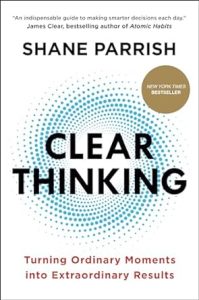
I’ve followed Shane Parrish’s work for a long time. Farnam Street, his blog, and The Knowledge Project, his podcast, have shaped a lot of how I think about decisions and learning. So when he announced Clear Thinking, I knew I’d read it.
This isn’t a book about hacks or shortcuts. It’s about how to build a life where good decisions happen by default. It’s about self-mastery, positioning, and making sure you don’t get in your own way.
Here are the big ideas that stuck with me.
Positioning Over Winning
Parrish opens with something most people miss: the best don’t chase wins. They avoid losses.
“While the rest of us are chasing victory, the best in the world know they must avoid losing before they can win.”
That’s the difference between thinking in single plays vs long games. Anyone can get lucky once. The people who consistently win are the ones who position themselves so bad luck doesn’t knock them out.
He uses the idea of staying power. If you can stick around long enough, the odds tilt in your favor.
This isn’t glamorous. It’s not about chasing shiny outcomes. It’s about protecting the downside, avoiding ruin, and setting up conditions where wins take care of themselves.
It reminded me of business. Every founder wants to grow fast. But the ones who endure are the ones who don’t let mistakes—or hubris—sink the ship. Positioning beats intensity.
The Four Defaults
Parrish’s core idea is that most of us aren’t thinking clearly most of the time. We’re running on what he calls defaults.
“We don’t think. We default.”
The four defaults are:
- Emotion – what feels good now
- Ego – what protects my image
- Social – what everyone else is doing
- Inertia – what I’ve always done
When I read this, I could see myself in every one of them. I’ve followed the crowd in buying tools (social). I’ve stuck with ideas too long because I didn’t want to admit I was wrong (ego + inertia). I’ve made small choices just because they felt good in the moment (emotion).
Parrish says noticing the defaults is the first step. Most people never get that far. They think they’re being rational when really they’re just running autopilot.
“You can’t be above the defaults. You can only work on recognizing them faster.”
That’s where clarity starts. Not with being smarter, but with catching yourself before your defaults take over.
The Problem With Outcomes
We live in a results-driven world. But Parrish points out how dangerous that can be.
“We judge decisions by outcomes, even though outcomes mix luck and skill.”
Good outcomes don’t always mean good decisions. Bad outcomes don’t always mean bad ones.
This is obvious in investing. You can take a reckless bet and win. You can make a thoughtful decision and still lose. Over time, though, process compounds.
“Clear thinking comes from clear process, not lucky outcomes.”
The challenge is training yourself to value process when the world only celebrates outcomes. Parrish’s point: the best in the world think in terms of process. They know luck evens out.
For me, this was a reminder to slow down. To ask: Did I actually consider multiple options? Did I define the problem clearly? Did I notice my defaults? That’s process.
Self-Mastery and Confidence
At the heart of the book is self-mastery. If you can’t master yourself, you can’t think clearly.
Parrish draws a sharp line between real and fake confidence.
Fake confidence comes from image, bravado, and shallow knowledge. It looks good until it breaks.
Real confidence is earned. It comes from competence and preparation. From doing the work, again and again.
“The most reliable confidence is earned, not faked.”
That line stuck with me. It’s easy to posture confidence, especially online. But the kind of confidence people actually trust is quiet and earned.
Self-mastery also means control over your emotions. Parrish doesn’t say to eliminate them. But he warns that when emotion drives the decision, you’re not thinking—you’re defaulting.
“Control is the foundation. Without it, clarity is impossible.”
That resonated. In my own work, the best decisions came from slowing down and stepping back, not from reacting in the heat of the moment.
Small Choices, Big Compounding
We tend to think success is about big moves. Big wins, big moments. Parrish disagrees.
“In the end, everyday moments matter more than big prizes. Tiny delights over big bright lights.”
Clear thinking isn’t about rare flashes of brilliance. It’s about consistent small choices that add up. The daily defaults you notice. The tiny frictions you remove. The little nudges in the right direction.
Over time, those compound.
This is freeing. It means you don’t have to overhaul everything at once. You just need to create space to make slightly better choices, over and over.
Who This Book Is For
This isn’t a book about tactics or quick wins. If you want productivity hacks, look elsewhere.
This book is about building a foundation. About positioning yourself, noticing your defaults, and making sure you don’t get in your own way.
It’s for leaders, builders, investors—anyone who needs to make clear decisions in a noisy world.
And it’s one of those books you don’t just read once. You revisit it when you feel yourself slipping back into autopilot.
Final Reflection
For me, Clear Thinking wasn’t just a good read. It was a mirror. It showed me the places I’m running on default and calling it “decision-making.”
The takeaway isn’t that you can eliminate your biases or be perfectly rational. It’s that you can notice faster, pause longer, and choose better.
Clarity doesn’t come from being smarter. It comes from creating space to think before you default.
That’s the kind of wisdom that compounds.